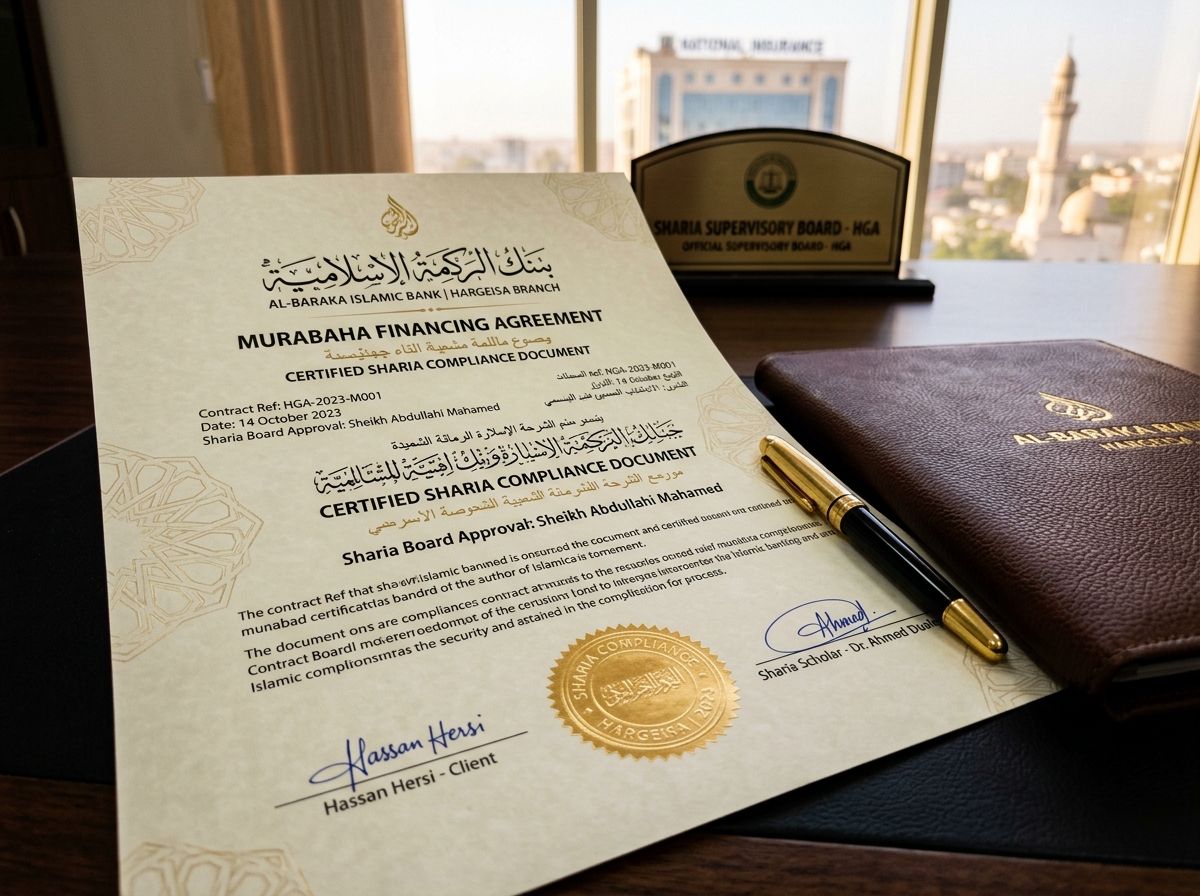
Murabaha contracts must disclose the exact original asset cost and markup profit margin, with no compounding penalties permitted.
What is Murabaha?
Murabaha is a non-interest bearing loan and sales transaction where the bank sells the good or asset to the borrower. Rather than lending cash with interest, the bank purchases the specified asset and transfers it to the client with an agreed profit margin.
How It Works: Practical Example
For example, if a customer wants to buy a house valued at $100,000, the bank purchases the property directly and sells it to the customer for $120,000, payable in structured monthly installments. That would be financing through Murabaha.
The markup profit is fixed at the time of agreement. Unlike conventional loans, the bank cannot increase the debt or charge compounding interest if the customer faces payment delays.
Key Benefits
- Full Price Transparency: The customer is informed of the exact purchase price and the exact bank markup.
- Asset-Backed Security: Financing is tied to real economic goods (real estate, vehicles, commercial equipment).
- Predictable Repayments: Installments remain fixed throughout the contract tenure.
Official 4-Step Consumer Dispute Resolution Protocol
If your financial transaction, fee deduction, or mobile banking request has not been satisfactorily addressed by your bank:
- Step 1: Direct Branch Inquiry — Lodge an official written inquiry with your commercial bank's branch manager and retain your ticket reference number.
- Step 2: Internal Bank Ombudsman — If unresolved within 5 business days, escalate to the accredited bank's Chief Compliance Officer or Customer Care Desk.
- Step 3: SLBA Consumer Secretariat — Submit a formal mediation petition via the SLBA Consumer Dispute portal (somalilandbanking.org/contact) with relevant transaction receipts.
- Step 4: Central Bank Regulatory Oversight — Final statutory arbitration through the Central Bank of Somaliland Supervision & Financial Integrity Division.